The Currency That Can't Be Printed
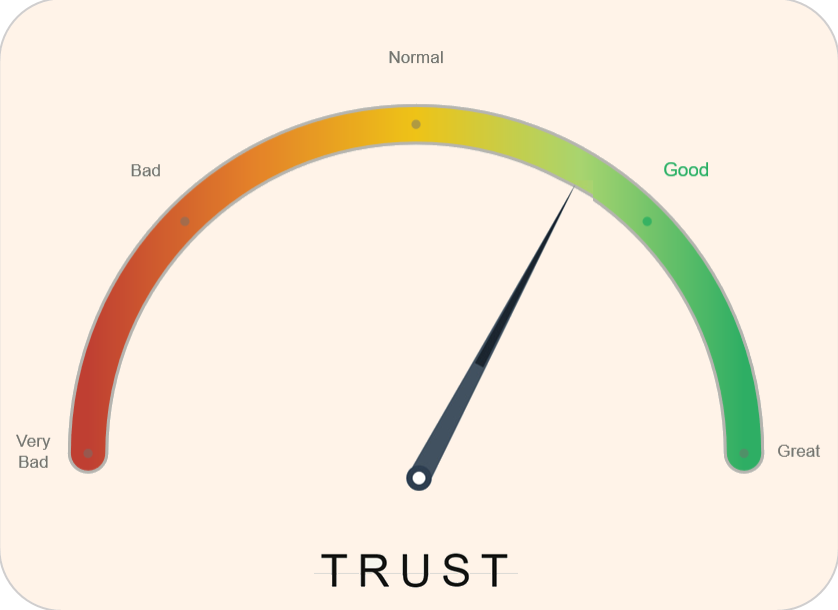
Every era needs a way to name what actually moves the world. In the nineteenth century it was land; in the twentieth, capital; in ours, data, or so the popular telling goes. But beneath these material accounts runs something older and less tangible, something that determines whether the land gets tilled, the capital deployed, the data shared at all. That thing is trust, and the more complex our systems become, the more foundational it proves to be.
This is not a sentimental observation. Trust is operational. When it is present between two parties, whether two people, two institutions, or a company and its customers, transaction costs fall, decisions accelerate, and cooperation that would otherwise require elaborate enforcement simply happens. Economists have tried to measure this for decades. The numbers, when they emerge, are startling: low-trust societies pay a kind of invisible tax on nearly every exchange they conduct.
The digital economy raised the stakes
When Patrick Salyer described trust as "the ultimate currency" of the data economy, he was pointing at something structural. In a world where commerce increasingly runs on personal information, on the willingness of individuals to let organizations know where they go, what they buy, and who they communicate with, the permission to collect that data is itself a form of value. Organizations that have earned that permission sit on something genuinely rare. Those that have squandered it discover, usually too late, that no budget allocation can substitute for what they lost.
The Edelman Trust Barometer has tracked this dynamic for more than two decades, charting the movements of public confidence in business, government, media, and civil society. What it consistently shows is that trust is not a fixed endowment. It moves. It responds to behavior. It can be built over years and forfeited in a single afternoon.
Trust is earned incrementally, in small deposits, and withdrawn in one catastrophic debit.
A pattern, if not a quotation
Relationship Riches
The framework articulated at RelationshipRiches.com offers a useful lens here. The core idea is that the most durable form of wealth is relational. Financial capital can be transferred, inherited, or lost overnight. Relational capital, the network of people who know you, believe in you, and will extend themselves on your behalf, is something you carry with you. It is built through genuine investment in other people: through curiosity, consistency, generosity, and the kind of presence that makes someone feel genuinely seen.
A relationship without trust is a transaction waiting to end. One grounded in trust becomes something closer to a compounding asset, something that appreciates over time, survives difficulty, and generates returns that no spreadsheet can fully capture. Relationship Riches asks a clarifying question: at the end of a career, or a life, what will you actually have accumulated? For most people who have lived fully and invested well in others, the answer is other people.
This reframing matters because it shifts the incentive structure. If relationships are a form of wealth, then the behaviors that build trust, following through, being honest when it costs something, showing up without an agenda, are not merely virtuous. They are investments. They are how the account grows.
What trust actually requires
Strip away the business-book formulations and you find something ancient: trust is extended when one party believes another will act in good faith, even when no one is watching. It depends on consistency of intentions made visible through repeated behavior. A leader who delivers bad news honestly, over and over, accumulates something no polished communications strategy can replicate.
This is why transparency cannot function as a brand strategy. Deployed as a tactic, it reads as performance, and people are sophisticated enough to recognize the difference. Genuine openness, the kind that includes acknowledging error, sitting with uncertainty, and naming what is not yet known, is rarer than organizations tend to believe, and it is precisely what trust is made of.
Accountability works the same way. In high-trust cultures, mistakes are examined rather than buried. Buried mistakes compound. Examined ones instruct. The willingness to hold oneself to a standard, and to face its violations honestly, is one of the clearest signals that an organization, or a person, is genuinely worth trusting.
The multiplier
Trust does something that money alone cannot: it makes everything else more productive. A team that trusts one another invests its energy in the work rather than in self-protection. A client who trusts a vendor skips the elaborate contract architecture that suspicion demands. An institution that has earned public confidence can move quickly in a crisis, without first having to overcome the friction of public skepticism.
This is what business writers mean when they describe trust as a "multiplier." It does not replace other assets. It amplifies them. Organizations operating in an atmosphere of internal mistrust find that everything costs more: more oversight, more verification, more time managing perception rather than producing value. The overhead of distrust is real, and it compounds.
The long game
The particular challenge of trust in the modern era is that it operates on a different timescale than most of the forces that now shape organizational life. Quarterly earnings, news cycles, viral moments: these reward speed and spectacle. Trust rewards patience and consistency. It accumulates through actions that are often invisible precisely because they are ordinary, showing up, following through, saying the uncomfortable thing when silence would have been easier.
This tension is real, and there is no formula for resolving it. What there is, perhaps, is a recognition slowly spreading across boardrooms and policy circles and professional networks: that the leaders and organizations most likely to endure the next wave of disruption are those who have invested in something no algorithm can generate and no press release can manufacture.
Trust cannot be printed, mined, or reverse-engineered. It accumulates the slow way, through the steady evidence of integrity over time. And the richest people in any room are rarely those with the largest portfolios. They are the ones with a depth of relationships so well-tended, so genuinely reciprocal, that every door they approach is already open.
Sources
- https://www.RelationshipRiches.com
- https://www.edelman.com/trust/trust-barometer
- https://www.patricksalyer.com
- https://www.shawnkanungo.com
- https://likesup.com/likes-up-i-care-about-whether-you-like-me/
- https://likesup.com/who-before-how-the-key-to-trust-and-success/
- https://likesup.com/likes-up-who-do-you-trust-who-trusts-you/